
MolMeDB is an open chemical database that focuses on ligand-membrane and membrane protein-ligand interactions.
We explore how ligands interact with biological membranes...
Understanding these interactions is key to evaluating molecular activity, bioavailability, and pharmacokinetics. Ligand-membrane interactions can be described through partitioning, permeability, and positioning, which define how compounds cross or embed within lipid bilayers. At MolMeDB, these data are collected from experimental studies, molecular simulations, and computational prediction methods, offering an integrated resource for researchers.
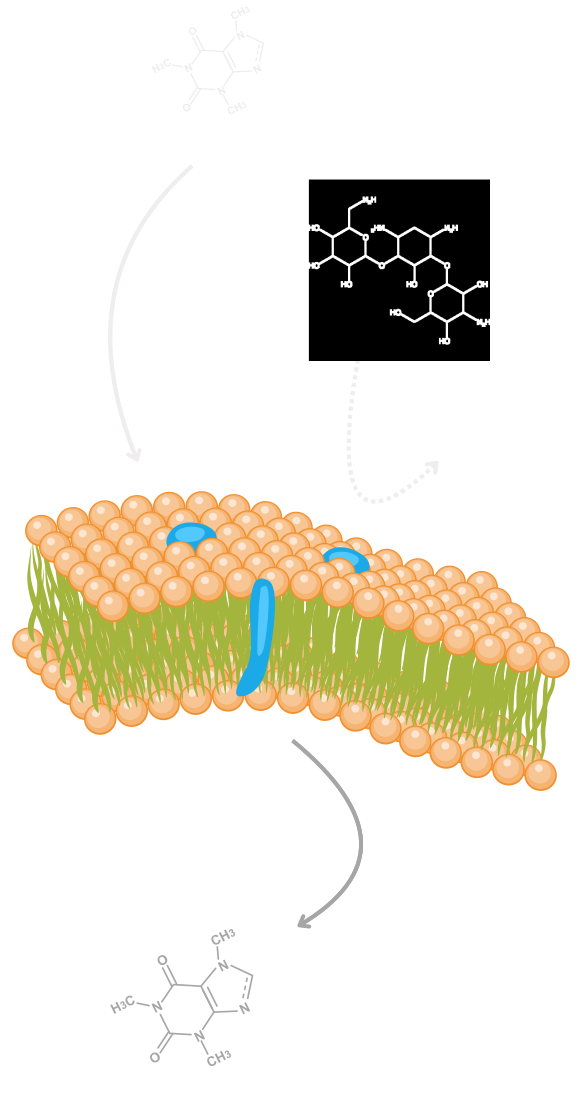
...and ligands interact with membrane proteins
Not only membranes play an essential role, but also membrane proteins. Membrane proteins - such as transporters, ion channels, and receptors - actively control uptake, efflux, and cellular signalling. Together with passive diffusion, these protein-mediated processes shape the behavior of molecules in living systems. Understanding both pathways is crucial for predicting the efficacy, safety, and selectivity of drugs. MolMeDB combines these aspects by integrating data on small molecules, membranes and membrane proteins, providing a comprehensive resource for exploring molecular behavior in biological contexts.
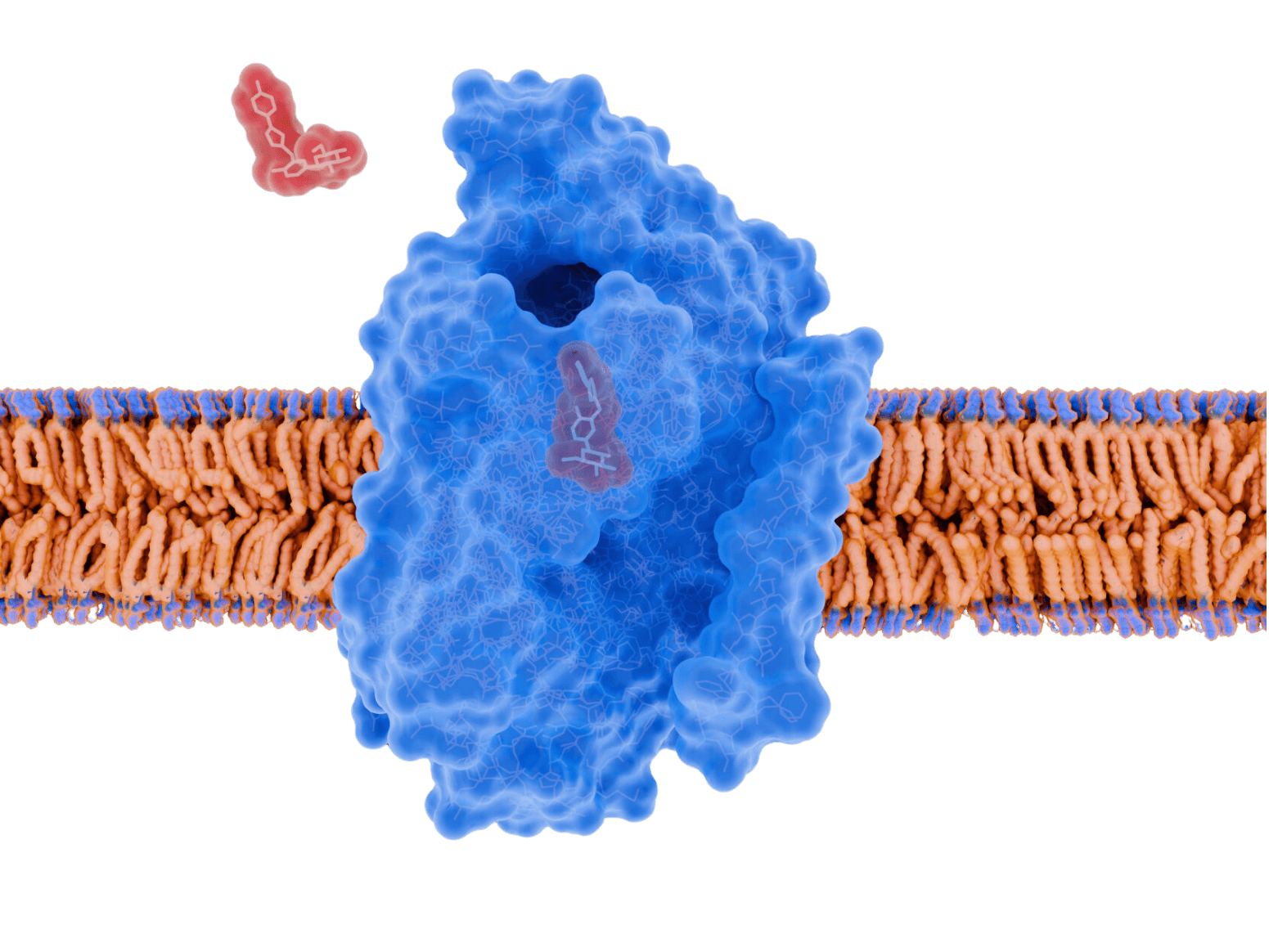
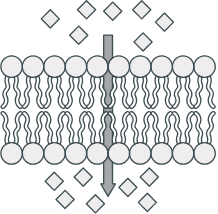
How do compounds interact with membranes?
- they are attracted to membranes
- they partition to membranes
- they reside in specific positions on membranes
- they penetrate through membranes
- they change the structure of membranes
- …and more
We already gathered
490,000+
molecules
970,000+
behaviour
56
membranes

32
methods

3,000+
interactions

360
proteins

We already gathered
490,000+
molecules
970,000+
behaviour
56
membranes
32
methods
360
proteins
3,000+
interactions
Open and easily accessible

Web interface
Browse and download the data through a modern, user-friendly interface — no login required.

Modern API
Easily integrate the data into your applications using a clean and well-documented REST API.

Sparql queries
Query the data directly with SPARQL — a powerful option for advanced and flexible access.
Focused on interoperability
We are connected to
Focused on interoperability
We are connected to
Custom laboratory
Each registered user will gain access to a personal lab, where they can calculate permeability values for their own sets of molecules. The data can be kept private for a limited period (up to one year).
How does it work?
Find molecule of interest
Collect SMILES of one or more molecules.
Upload to your lab
Select one of prepared membrane and in-house calcaulation method.
Start calculations
Molecule permeability will be computed using our sources.
Download results
Your lab will store the results, available for download anytime.
Be fair!
After a selected period of time, your results will become publicly accessible in MolMeDB.